
The Studio – ADHD Group coaching membership
ADHD is sometimes being great at starting things we love…
What sucks is that ‘adulthood’ means you have to keep going and finish them.
(Boooooo!)

Niche hobbies.
Unexpected career pivots.
A “multi-passionate” era that doesn’t end.
Everyone loves the buzz when ADHD kicks things off.
Nobody admits that…
ADHD can be great at starting things you’re interested in.
Not the boring grown up adult stuff that doesn’t end, ever. And unfortunately, that’s what our lives really run on.
If you were diagnosed “late-late” – past your 30s – you’ve maybe had time to enjoy the good parts of this.
You’ve collected careers, hobbies and figured out that “multi-passionate” was basically invented for people like you.
But you also know the other side.
How keeping things going – especially the ‘responsible adult’ part of being a grown-up – is a totally different game.
You watch your peers manage paperwork and responsibilities like they’re no big deal, and some part of you knows: if you put all your focus there, everything that lights you up starts to fizzle out.
And if that’s all you focus on, long enough, you burn out. You get fed up. The grey clouds move in.
Where did life’s sparkle go?
Nobody talks about keeping life running and keeping your sparkle alive – even though we need that sparkle like oxygen. Lose it, and we deflate like sad balloons.
At the same time, we can’t just opt out of the essential stuff that has no finish line (hello burnout).
So how do we keep it going, when for an ADHD brain, “boring adult task” rarely becomes autopilot the way it does for everyone else?
The answer isn’t “just try harder, alone.” That’s what the Studio is for.
Meanwhile your brain is juggling:
– dog vaccinations, bills, prescriptions that need refilling again this month, what’s actually in the fridge, insurance renewals (because a decent deal means moving providers every single year), the emails piling up from friends, family, work, school, have you got clean clothes for the presentation tomorrow, a meds review appointment at the doctor. (take a breath)
– Booking holidays or summer camps six months before they fill up. Helping your kid who has a class birthday every single week and always tells you the day before that they need a card and exactly the right gift or your kid will be called ‘the weird one’ until the end of time. Laundry that needs doing, and then – this is the part that never ends – put away. Every week. Forever.
And then, right in the middle of all that mind-numbing essential work: a shiny new idea shows up!
Rollerskating. A marathon. A boutique invitation printing business for the party you now have to throw. Renovating an old ambulance and driving across Europe using sunflower oil as fuel…
Suddenly you’re neck deep in the Google rabbit hole about all of that research, because that is so much more fun than sitting with the anxiety of the 40 million things you need to organise.
There’s another rollercoaster running underneath that
– when you’re anticipating how things will go, remembering all your tasks, feeling all of that pressure intensely it actually changes what you can do that day. Even if nobody around you seems to be struggling with exactly the same work.
Then, if something does light up your brain – a person, a hobby, an idea – you’ll surf that wave of joy right past the unpaid invoice and the report that’s due, because you literally can’t start the boring thing until you’ve got enough dopamine to hit “go.”
If any of this made you feel a little ‘caught out – that’s me’… you’ve found your safe place. Drop the shame or guilt. You are holding down a full-time invisible job nobody else can see – adult life with ADHD.
The Studio – What it is, is SPACE.
And for most people with ADHD, life is the opposite of space – it’s endless pressure and distraction, followed by paying a very high price for that distraction.
Mental space.
You don’t save up your questions for a scheduled slot. You drop them as they show up, and get them out of your head. That’s room being made, daily, instead of once a fortnight.
Emotional Space
A trusted partner and a safe place to talk through the rollercoaster while it’s happening – with time to actually practice managing it, not trying to remember the strategy you practiced three weeks ago. The door’s open. It has what you need, when you need it.
Time Space
You’re not rationed to a 45 minute slot. You know you can show up when things get crunchy and that you’ll get a real response – even if it’s not instant. That alone takes the pressure off.
And when the pressure’s off, your nervous system settles, and then the ADHD itself gets less ‘loud’.
We work on the stuck-right-now and the why-does-this-keep-happening:
|
The practical: |
And the deeper: |
|
“I’ve got four things due this week and I genuinely don’t know where to start.” |
“Why do I keep sabotaging myself the second I sit down to work? I’m ready to go, and then my phone’s open, and an hour’s gone. What is that?” |
|
We sort out what’s due when, what’s actually yours to do, what you need and whether you already have it, who else is involved, what can be shared or delegated, where your resources are. |
We look at the exact task, where the phone was, the exact second you picked it up, what pulled you back to consciousness – and get clear on the why now, how before we ever touch how it could go differently. |
That kind of unpacking struggles to fit into a session every other week.
In the studio, it fits, because I’m in it with you – as it’s happening – not reading about it in a form or report days later.
Right now, you know where you are. But here’s what changes for people after working in the studio.
The biggest shift you need isn’t a new tool. It’s the moment you realise you’ve truly ‘got’ the tools in your own brain, 24/7 – and know when to reach for them without being told.
ADHD Coaching Membership
How the studio works
This is a new format so let me lay it out for you.

Then you’re in the flow of the studio. Whatever day you join, something’s already happening:
Intention, practice, get coached, repeat.
Every week we go through a rhythm that allows you to get direct coaching with me on YOUR challenges, your wins, your ADHD – with the benefit of knowing the others in our small Studio community get you.
Founding Members – (first 10 members only) – £197 per month
Studio Members – £245/month.
Your first commitment is for 3 months – long enough for the daily rhythm to actually anchor and you to start developing adaptive self-coaching.
After that, it’s month to month, and you can pause or step away whenever you need to.
You ready?
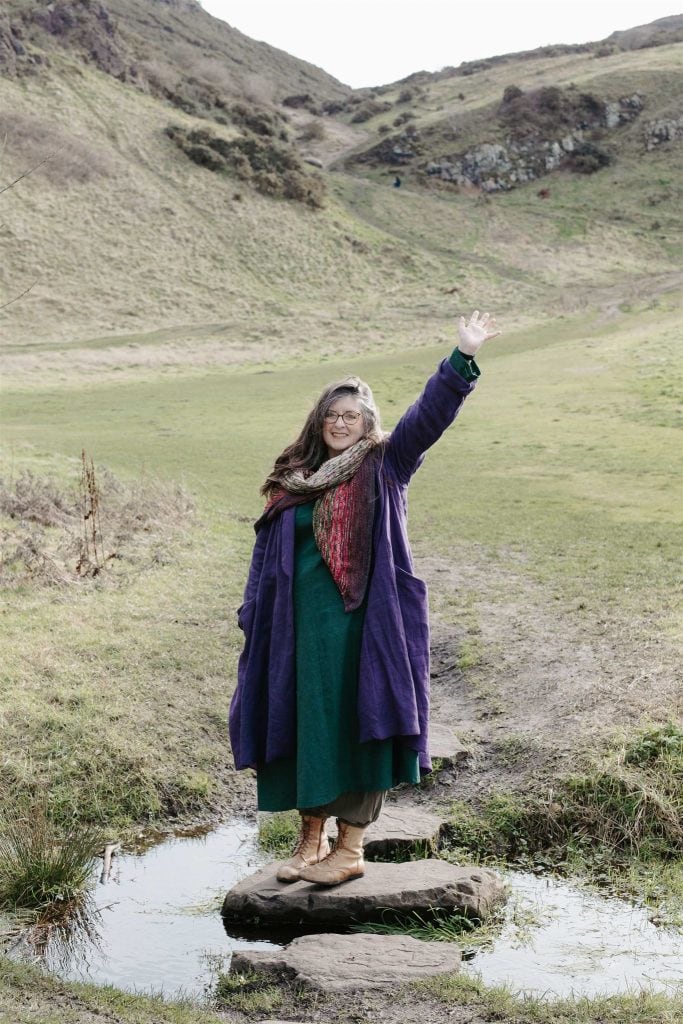

Hi – I’m katherine
Like a lot of coaches, I got into ADHD coaching after my own diagnosis – and after getting frustrated at how little existed for someone like me.
I didn’t need therapy (done that, got the T-shirt). I needed someone who actually understood what life with ADHD felt like, especially if you were “book smart” and everyone assumed you had it sorted – or if you were parenting a kid with ADHD while every parenting strategy on earth assumed your brain worked like theirs.
Coaching changed things for me. It built confidence in who I actually was and what I could do, without raking over the past every session.
But it wasn’t right yet – I wanted to create a new way
The studio exists because I noticed something frustrating: even the coaching model I loved was built on assumptions we had borrowed from therapy – assumptions that aren’t always practical for an ADHD brain. The research backs this up.
Habits and behavioural change take longer to build and anchor with ADHD.
Daily habits form more easily than weekly ones. And trying to hold onto every insight and question for two weeks, then cram it all into one session and pick a single thing to work on? That’s just extra pressure stacked on top of the things we’re already struggling with. No wonder we all go blank if someone says ‘what do you want to work on this week?’!
So I went looking – asynchronous coaching models, the neurobiology of behaviour change – and out of that research, I built what I would have loved when I was starting out in this brand new world of finally understanding my own brain. Not having to carry it all alone until the next appointment.
Building my own inner coach over time, after all my training, instead of waiting to borrow someone else’s. Knowing I wasn’t the only one – after forty years of not understanding why life felt so much harder than it seemed to for everyone else.
Whatever you’re thinking or feeling about yourself and your ADHD right now – I promise you, the truth is so much more beautiful.
Yes, some things may always take more effort. I see your laundry pile of doom.
But the things that actually matter?
You will fly with those. And when you do, you become a lighthouse – for your family, your friends, for the stranger in line whose kid just got diagnosed, who spots something in you they recognise.
You wouldn’t call yourself a failure for needing glasses to drive. Building a way of doing things that works with your ADHD is exactly the same.
Once that becomes second nature, you’ll see you’re fully capable of building things your way, coaching yourself, supporting other people with real boundaries – and sending positive ripples out into the world made of everything that’s actually you, that has nothing to do with laundry or timekeeping.
That’s such a small piece of who you are, against the size and beauty of everything else you are.
There’s a line from Ben Zander’s The Art of Possibility that I keep coming back to:
“In the measurement world, you set a goal and strive for it.
In the universe of possibility, you set the context and let life unfold.”
We’re not chasing a target here.
We’re building your ‘context’ – casting the spell – and then growing into it, and seeing what unfolds.